
Jump to:
일본에는 크게 5가지 종류가 있습니다. 쇼유(간장): 코이쿠치, 우스쿠치, 타마리, 시로, 사이시코미. 각각 고유한 맛 프로필, 색상 및 요리 용도가 있습니다.
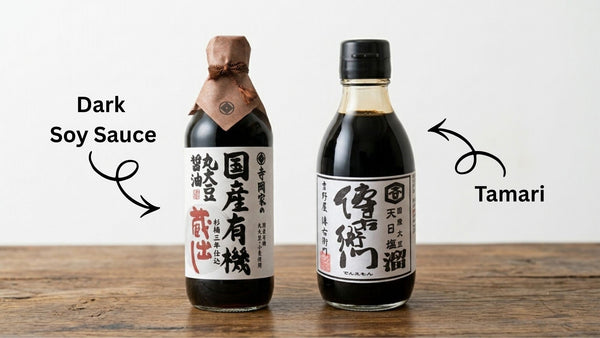
사람들이 "타마리와 간장"을 비교할 때 일반적으로 타마리와 간장을 비교합니다. 고이쿠치 간장일본 간장 소비량의 약 80%를 차지하는 진한 간장입니다. 둘 다 발효간장이지만 재료, 맛, 질감, 요리에 사용되는 방식이 다릅니다.
타마리는 일반적으로 밀을 거의 또는 전혀 사용하지 않고 만들어져 더 두꺼운 질감, 더 깊은 색상 및 더 풍부한 감칠맛을 제공합니다. 반면 고이쿠치 간장은 대두와 밀을 모두 함유하고 있어 식감이 더 가볍고 감칠맛, 짠맛, 단맛이 더욱 균형있게 조합되어 있습니다.
이 가이드에서는 요리에 적합한 간장을 선택할 수 있도록 타마리 소스와 진간장을 나란히 비교하고 맛, 영양 및 최상의 용도를 살펴보겠습니다.
일본 간장(Shoyu)이란 무엇입니까?
표준 일본 간장 (고이쿠치) 또는 진한 간장은 일반적으로 볶은 밀과 대두를 1:1 비율로 균형 있게 사용하는데, 이 공정은 에도 시대에 완성되었습니다. 높은 밀 함량은 설탕으로 전환되는 탄수화물을 제공하여 발효 과정에 연료를 공급하는 데 도움이 됩니다.
다들 아시죠 일본 간장은 무엇입니까?, 다소간. 그러나 간장이 다른 아시아 품종과 다른 점은 세 가지로 요약할 수 있습니다. 즉, 밀과 대두의 비율, 발효 기간, 야자당이나 당밀 첨가와 같은 지역적 변형입니다.
 이 과정은 쪄서 지방을 제거한 대두(더 빠른 단백질 분해를 위해 제거된 기름)를 볶아서 분쇄된 밀과 결합하는 것으로 시작됩니다. 엄선된 누룩 곰팡이 그런 다음 배양물을 소금물과 결합합니다(발효 조절을 위해). 그리고 그런 다음 삼나무 통이나 대형 통에서 숙성됩니다. 스테인레스 스틸 탱크.
일본 간장의 5가지 일반적인 유형
일본 농업 규격(JAS)에 따라 일본 간장은 공식적으로 다섯 가지 유형으로 분류됩니다.
고이쿠치 간장 (r그런 맛)
일본 간장으로 요리할 때 대부분의 사람들이 주목하는 것. 일본에서는 간장의 약 84%가 간장이다. 코이쿠치. 짙은 호박색을 띠는 갈색을 띠고 대담하고 짭짤한 감칠맛이 나며 약간 달콤한 마무리가 특징입니다. 기코만과 야마사는 국제적으로 인정받는 상업용 벤치마크 브랜드.
우스쿠치 간장 (가벼운 맛)
 창백함 황금빛 호박색 이는 실제로는 더 짜다 보다 코이쿠치. 그것은 간사이 지방에서 더 인기가 있는 곳 요리의 전통 교토 가이세키처럼 상금 자연스러운 색감을 살리고, 재료 본연의 섬세한 맛을 과하지 않게 선호합니다.
사이시코미 간장 (두 번 양조)
야마구치현산 최고급 일본 간장입니다. 소금물을 사용하는 대신, 미리 끓인 소스에 누룩을 두 번 발효시킵니다. 사이시코미의 뚜렷한 시럽의 단맛과 깊이가 장식이나 이슬비에 더 많이 사용됩니다.
시로 간장 (백간장)
 19세기 초에 개발된 헤키난, 아이치현. 시로 간장 이다 주로 밀로 만든 아주 조금 콩과 발효는 훨씬 짧습니다. 요리에 색을 거의 입히지 않으면서 섬세하고 미묘하게 달콤한 맛을 만들어냅니다. 그것은 적합하다 자왕무시 또는 색상 보존이 중요한 맑은 수프.
타마리 간장
다섯 번째로 분류됨 자스 기술적으로는 일본 규정에 따라 간장 계열에 속하지만, 간장과의 차이점은 다음과 같습니다. 코이쿠치 이다 실질적인 아래에서 전체 논의를 할 가치가 충분합니다.
일본 간장에 대해 더 알아보고 싶으신가요? 우리의 가이드를 읽어보세요 최고의 일본 간장 15가지, 프리미엄 통 숙성 간장부터 다양한 일상용 옵션까지.
무엇입니까? 타마리?
 타마리 대 간장 논쟁에는 두 가지 공통점이 있습니다. 둘 다 다마리의 산물입니다. 콩 둘 다 발효 소스입니다. 타마리 간장그러나 훨씬 오래되었고 된장 생산의 부수적인 부산물로 시작되었습니다. 본질적으로 그것 된장 소스였어요’.
다마리 간장은 1254년경 선승 가쿠신이 중국에서 돌아와 간장 제조법을 가지고 유래한 것입니다. 긴잔지 된장을 와카야마의 마을 사람들에게 가르쳤습니다. 된장 제조업자들은 발효된 된장 주위에 고인 액체의 맛이 아주 특별하다는 것을 알아차렸습니다.
'타마리'라는 단어는 동사 ''에서 유래되었습니다.타마루’, '모으다' 또는 '모으다'라는 뜻’. 그 사용과 생산은 결국 나고야와 아이치현의 다른 지역의 된장 제조 허브를 중심으로 이루어졌습니다.
 그러나 타마리 제조는 점차 단순히 된장 산업의 부산물을 수확하는 것에서 벗어나게 되었습니다. 과정은 마치 코이쿠치 간장, 찌는 것부터 시작해 콩 특정 누룩과 섞기 전에 곰팡이. 그러나 타마리는 느리고 자연적인 조건에서 발효되는데, 흔히 6개월에서 1년 이상입니다.
타마리는 다른 간장처럼 '밀 기반'이 아니지만 현대 생산 방법에서는 발효 과정에 소량의 밀을 사용합니다.아마도 3 10% 이하이므로 라벨을 확인해야 합니다.
건강에 초점을 맞춘 현대 소비자, 특히 수출 시장을 위해 고품질의 제품이 있습니다. 글루텐 프리 타마리 소스 선택하다 에서.
간장과 타마리 소스의 주요 차이점

간단히 말해서 간장(코이쿠치)과 타마리는 모두 일본 간장이지만 구성과 용도가 다릅니다. 고이쿠치에는 밀이 함유되어 있어 질감이 더 가볍고 균형 잡힌 단맛과 향기로운 맛이 있어 매일 요리에 이상적입니다. 타마리에는 밀이 거의 또는 전혀 포함되어 있지 않아 더 걸쭉한 농도, 더 깊은 감칠맛, 더 어두운 색상을 제공하며 디핑 소스나 글레이즈로서 뛰어난 성능을 제공합니다.
|
특징 |
고이쿠치 간장(진한 간장) |
타마리 간장 |
|---|---|---|
|
주요 성분 |
대두와 밀(보통 1:1) |
대부분 콩, 밀은 거의 또는 전혀 없음 |
|
글루텐 함량 |
글루텐 함유 |
글루텐이 없는 경우가 많지만 라벨을 확인하세요. |
|
풍미 |
균형잡힌 감칠맛, 짠맛, 은은한 단맛 |
더 풍부하고, 더 깊고, 더 농축된 감칠맛 |
|
질감 |
얇고 쏟아지기 쉬움 |
더 두꺼워지고 점성이 높아짐 |
|
색상 |
호박갈색이며 반투명합니다 |
짙은 갈색이며 더 불투명합니다. |
|
발효 |
활성 효모 배양을 통한 밀 기반 발효 |
최소한의 밀과 높은 대두 함량으로 전통적으로 발효되었습니다. |
|
소금 함량 |
약 16% |
약 15~16% |
|
아미노산 함량 |
낮은 |
더 높음, 종종 1.5~2배 더 높음 |
|
최고의 용도 |
볶음, 양념장, 라면, 조림, 디핑 소스 |
사시미, 글레이즈, 데리야끼, 마무리 소스, 드레싱 |
|
요리 행동 |
액체와 국물에 쉽게 혼합됩니다. |
윤기 있고 달라붙는 유약으로 변합니다. |
|
가열하면 맛이 난다 |
알코올이 증발하면서 독특한 향이 납니다. |
풍미를 유지하고 풍부한 래커 마감 처리 |
|
이상적인 대상 |
일상적인 일본 요리 |
디핑, 글레이징 및 글루텐을 고려한 요리 |
생산방법 및 성분
아래 일본의 간장 분류 체계, 타마리는 재료뿐만 아니라 생산 방식에서도 코이쿠치와 다릅니다. 고이쿠치는 대두와 밀을 대략 같은 양(대략 50:50)으로 양조하고 약 8개월 동안 숙성시킵니다. 타마리는 대두가 풍부한 된장 누룩과 밀이 거의 사용되지 않으며 일반적으로 숙성 기간이 더 깁니다.
감칠맛과 맛 프로필
간장에 밀이 들어있어 밝고 다소 달콤한 그 맛에 가장자리. 아미노산 수율이 높은 타마리는 훨씬 더 깊은 감칠맛을 가지고 있습니다. 코이쿠치 짠맛과 감칠맛이 입맛의 꼭대기에 닿는 반면, 타마리의 맛은 천천히 전개되고 오래 지속되며 입맛의 중간과 뒷부분에 울려 퍼집니다.
우리가 직접 시음해 본 결과, 타마리는 고이쿠치보다 입안에 오래 머무르는 경향이 있습니다. 사시미와 함께 사용하면 더 깊은 감칠맛이 섬세한 맛을 압도하지 않으면서 생선을 보완하는 반면, 고이쿠치는 더 밝고 향기로운 특성을 제공합니다.
점도 및 조리 거동
가열하면, 코이쿠치 알코올과 에스테르를 빠르게 증발시켜 독특한 향을 방출합니다. 보다 침투성이 뛰어난 품질로 인해 긴 조림, 매리네이드 및 볶음 요리에 가장 적합합니다.
눈에 띄게 걸쭉한 점도로 인해 타마리는 더 풍부하고 지속적인 맛이 필요한 디핑 소스로 잘 작동합니다. 열에 노출되면 증발에 저항하고 대신 감소하다 윤기 있고 끈적거리는 코팅이 됩니다. 이는 글레이징(데리야끼) 또는 마무리 소스로 이상적입니다..
식품에 대한 색상 기여
코이쿠치 따뜻한 마호가니색으로 음식에 색을 입힐 수 있지만 유적 단백질과 야채의 기본 질감이 드러날 만큼 충분히 반투명합니다.
반면에 Tamari는 상당히 불투명하거나 심지어 깊을 수도 있습니다. 진한 갈색, 경계선 검정색. 구운 고기와 쌀과자에 어둡고 래커 처리된 고대비 마감을 제공할 수 있습니다(센베이).
일본 미림과 설탕의 조합 우스쿠치 간장도 음식에 광택을 주지만 색이 진하지 않습니다.
영양 프로필
타마리는 물론 순수로 만들어졌습니다. 콩 종종 표준 아미노산 질소 함량의 약 1.5~2배를 함유하고 있습니다. 코이쿠치. 또한 총 플라보노이드와 글루탐산 및 알라닌산과 같은 독특한 아미노산의 농도가 더 높습니다.
염분 함량에 대한 JAS 규정은 다음과 같습니다. 우스쿠치 (~18%–19%), 코이쿠치 (~16%) 및 타마리(~15%~16%).
맛이 강해서 타마리가 더 짜다고 느끼시는 분들도 계시겠지만, 현실 발효를 안정화하는 데 염수가 덜 필요합니다. 우스쿠치 그것은 가장 짠 것입니다.
사용 시기 간장
진간장을 사용하세요(코이쿠치) 소스가 접시 속으로 사라져야 할 때. 여기에는 고열 웍 요리, 길게 끓이는 요리, 라면 국물, 간장 양념장, 팬 디글레이징 등이 포함될 수 있습니다.
왜요? 고이쿠치 더 얇은 농도는 액체와 국물을 통해 빠르게 분산됩니다. 밀에서 추출한 향료는 쓴맛이 나지 않고 오랫동안 요리해도 살아남습니다. 더 날카로운 짠맛이 단백질에 더 효율적으로 침투합니다.
에 대한 데리야끼, 규동 또는 츠유 국물을 담그고, 코이쿠치의 밝고 단호한 성격은 요리의 맛을 더 무겁고 덜 명확하게 만드는 타마리로 대체될 수 없습니다.
언제 타마리를 사용하려면
타마리는 사시미 디핑 소스, 다다키 마무리 소스, 마지막 순간에 글레이징 소스로 사용하는 것이 가장 좋습니다. 드레싱 차가운 요리. 그것은 또한 마지막 순간 굽는 것. 기본적으로 어디서나 소스가 음식 위에 얹히는 게 아니라 요리하다 그것.
Tamari의 점도로 인해 흐르기보다는 코팅이 됩니다. 더 깊고 느린 감칠맛을 직접적으로 인지할 수 있습니다. 그렇지 않다 일단 국물에 녹였습니다. 그 두께는 캐러멜화되어 래커 마감 처리됩니다. 코이쿠치, 더 얇아서 잡기가 어렵습니다.
보너스: 타마리 요리법
부리 데리야끼 – 방어(부리)는 풍미가 뛰어나고 천연 지방이 풍부하기 때문에 이 조리법의 타마리 글레이즈는 생선의 기름기 균형을 맞추는 데 도움이 됩니다. 재료를 섞은 다음 소스를 팬에 넣고 캐러멜화하세요.
글루텐 프리 냉장 부카케 우동 – 전통적인 우동은 밀로 만들어지지만, 이 레시피에서는 쌀가루와 타피오카 가루를 사용하여 글루텐 프리 면을 만듭니다. 차가운 수프에는 미린, 글루텐 프리 타마리, 설탕, 다시 가루, 물, 소금이 혼합되어 있습니다.
야키니쿠 디핑 소스 – 이 레시피는 3년 동안 통숙성한 타마리에 설탕, 꿀, 참기름, 생강, 마늘, 볶은 참깨를 섞어 풍부하고 맛있는 디핑 소스를 만들어냅니다.
두부덮밥 비건볼 – 다마리, 된장, 설탕, 요리술, 생강을 섞어 두부에 양념을 하여 고기 같은 식감이 만족스러운 비건 덮밥입니다.
전통 생선 조림 – 타마리는 미린, 사케, 설탕, 생강과 짝을 이루어 조리용 액체가 줄어들면서 농축되는 윤기 있고 풍미 가득한 소스를 만듭니다.
선반에 둘 다 넣을 수 있는 공간!
타마리 그리고 고이쿠치 간장 이는 경쟁자가 아니라 일본의 발효 전통을 뚜렷이 표현하는 두 가지입니다. 코이쿠치의 밀로 만든 단맛, 균형 잡힌 감칠맛, 향긋한 복합성은 일상적인 일본 요리의 표준 선택이 됩니다.
타마리의 더 두꺼운 질감과 더 깊고 느리게 펼쳐지는 감칠맛은 탁월한 마무리 소스, 디핑 소스 및 글레이즈를 만듭니다. 글루텐에 민감하거나 특정 식이 요법이 필요한 사람들에게는 타마리가 선호되는 경우가 많습니다.
다른 모든 사람들에게는 둘 다 손에 쥐고 각각을 언제 사용해야 하는지 배우는 것이 단순히 좋은 요리입니다.


0 댓글